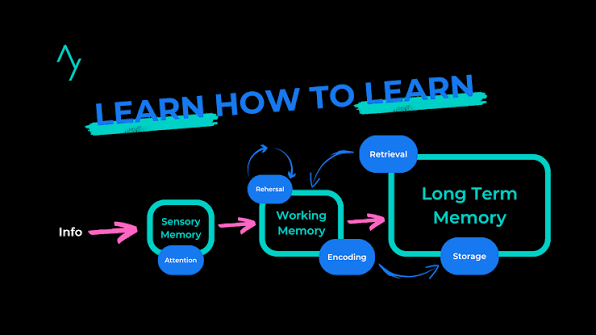
Studying for hours does not always mean you will remember what you have learned. You might read the same chapter several times, highlight important sentences, and still struggle to explain the topic during an exam. The problem may not be how much you study, but how you practice remembering information.
The active recall study technique is a practical way to improve learning by retrieving information from memory instead of simply reviewing it. It encourages you to test what you know, identify gaps in your understanding, and revisit difficult concepts before an exam.
Whether you are preparing for school tests, university examinations, professional certifications, or everyday learning, active recall can make your study sessions more purposeful. The best part is that you do not need expensive software or special equipment. You can begin with your textbook, a blank sheet of paper, and a few well-designed questions.
What Is the Active Recall Study Technique?
Active recall is a learning method in which you deliberately try to remember information without looking at your notes, textbook, or other learning materials. It is also known as retrieval practice.
For example, after studying a biology chapter about photosynthesis, close your book and answer this question: What happens during photosynthesis, and why is sunlight important? You might write your answer, explain it aloud, or draw a diagram from memory. Once you finish, compare your response with your textbook and correct any mistakes.
This process is different from rereading. When you reread a paragraph, the information is visible in front of you, so it may feel familiar even if you cannot recall it independently. Active recall checks whether you can actually retrieve and explain what you have learned.
Research on retrieval practice suggests that trying to remember information can improve long-term retention, particularly when you check your answers and correct misunderstandings.
Why Does Active Recall Help You Remember More?
Active recall is useful because it changes studying from a passive activity into a mental task that requires effort. Instead of only exposing yourself to information, you practise producing it from memory.
1. It Strengthens Long-Term Learning
When you retrieve information, you practise accessing it again. Repeated retrieval can make it easier to remember the same material in future study sessions and during examinations. This is one reason practice questions and self-testing can be more effective for long-term retention than repeatedly reading the same material.
2. It Reveals What You Do Not Know
Reading a chapter can create the impression that you understand everything. Testing yourself often reveals the difference between recognizing an explanation and being able to produce it yourself.
For example, you may recognize a mathematical formula when you see it but struggle to remember when to use it. Active recall helps identify this gap so you can focus your revision where it is most needed.
3. It Improves Understanding
Active recall is not limited to memorizing definitions. You can use it to explain causes, compare theories, solve problems, and connect ideas.
Ask yourself questions such as “Why does this happen?”, “How is this concept different from the previous one?” and “Can I give an example?” These prompts encourage deeper thinking rather than simple memorization.
4. It Makes Revision More Focused
Instead of spending equal time on every topic, use your recall results to decide what to review next. Concepts you remember accurately may need less immediate attention, while difficult or frequently forgotten topics deserve additional practice.
How to Use Active Recall While Studying
You can introduce active recall into almost any subject. Follow these steps to make the method part of your regular study routine.
Step 1: Study a Small Section First
Begin by reading a short section of your textbook, reviewing lecture notes, or watching a lesson. Focus on understanding the main ideas before testing yourself.
Avoid trying to memorize an entire chapter at once. Smaller sections make it easier to identify specific information and practise retrieving it accurately.
For example, if you are studying history, focus on one event, its causes, its major developments, and its consequences before moving to the next topic.
Step 2: Close Your Notes and Recall the Main Ideas
Put your study materials away and try to remember what you have just learned. You can write a summary from memory, explain the topic aloud, list important facts, or sketch a diagram.
Do not worry if your first attempt is incomplete. The purpose is to discover what you can recall without assistance, not to produce a perfect answer immediately.
A simple blank-page exercise works well: write the topic at the top of a page and add everything you can remember underneath it.
Step 3: Turn Headings Into Questions
Questions give your brain a clear target during recall practice. Convert headings, learning objectives, and key concepts into prompts.
For example, if your heading is “Causes of Climate Change,” ask:
- What are the major causes of climate change?
- How do greenhouse gases affect Earth’s temperature?
- What is the difference between natural and human-related causes?
- Can I provide an example of each cause?
Try answering each question before checking your notes. For subjects that require explanation, use open-ended questions rather than relying entirely on multiple-choice options.
Step 4: Check Your Answers Carefully
After attempting to recall the information, return to your learning materials. Compare your answer with the source and identify missing details, inaccurate statements, or concepts you misunderstood.
Do not simply mark an answer wrong and move on. Write down the correct explanation in your own words and make sure you understand why your original response was incomplete.
Feedback is an important part of effective retrieval practice because it helps prevent mistakes from becoming lasting misunderstandings.
Step 5: Repeat Difficult Questions Later
Once you have corrected your mistakes, try answering the same questions again without looking at the answers. Then revisit them in later study sessions.
You might review difficult questions the next day, a few days later, and again the following week. Adjust the timing according to how well you remember the material and how soon you need to use it.
This combination of active recall and spaced review helps you practise retrieving information over time rather than relying on one long revision session.
Four Practical Active Recall Methods for Students
There is no single way to practise active recall. Choose a method that fits your subject, learning preferences, and available time.
1. Flashcards
Flashcards are useful for vocabulary, definitions, formulas, dates, and short explanations. Write a question on one side and the answer on the other. Look at the question, produce your answer, and then check the reverse side.
Try to answer before flipping the card. If you reveal the answer too early, you may recognize it without genuinely practising recall.
Keep each card focused on one main idea. For complex topics, create separate cards for definitions, examples, applications, and comparisons.
2. The Blank-Page Method
The blank-page method is simple and requires no special tools. After studying a topic, take a blank sheet and write everything important you can remember.
When finished, compare your page with your notes. Use a different mark or pen colour to identify missing information and correct errors. Your completed page becomes a useful guide for your next revision session.
This method is especially helpful for essay subjects, lecture summaries, scientific processes, and topics that contain several connected ideas.
3. Practice Questions and Mini-Tests
Answer textbook questions, previous exam questions, or questions you create yourself. Whenever possible, practise without looking at the solution first.
For mathematics and science, attempt problems step by step rather than merely memorizing final answers. For literature, history, or social sciences, practise writing short explanations and supporting them with evidence.
Mini-tests can also help you become familiar with the kinds of questions you may face in an actual examination.
4. Teach the Topic in Your Own Words
Imagine explaining the subject to someone who has never studied it. Speak aloud or write a simple explanation without reading from your notes.
If you get stuck, identify the missing idea and review it. Then try explaining the concept again in clear language.
Teaching-style recall is particularly valuable when you need to understand relationships between ideas rather than memorize isolated facts.
How to Combine Active Recall With Spaced Repetition
Active recall and spaced repetition work well together, but they are not the same technique. Active recall describes how you study: by retrieving information from memory. Spaced repetition describes when you review it: across separate sessions rather than all at once.
Here is an example schedule for a topic you study on Monday:
| Review session | What to do |
|---|---|
| Monday | Study the topic and complete your first recall attempt |
| Tuesday | Answer the questions again and correct mistakes |
| Thursday | Test yourself without looking at your notes |
| Sunday | Complete a short quiz covering the topic |
| The following week | Revisit difficult questions and check long-term recall |
This is a sample schedule, not a strict rule. If you cannot answer a question, review the relevant material and test yourself again sooner. If you can answer confidently and accurately, you may leave a longer gap before the next review.
Common Active Recall Mistakes to Avoid
Active recall is straightforward, but a few habits can reduce its effectiveness.
Looking at the answer too quickly: Give yourself time to attempt an answer before checking your notes. The goal is to practise retrieval, not just recognition.
Ignoring mistakes: Incorrect answers show you what needs attention. Review the explanation, correct the gap, and try again later.
Memorizing words without understanding: Definitions matter, but you should also practise examples, explanations, applications, and comparisons.
Creating too many flashcards: A large collection of low-quality cards can become difficult to manage. Focus on important concepts and write clear, specific questions.
Studying only once: A single recall attempt may not be enough for long-term retention. Revisit important information across multiple sessions.
Testing yourself without feedback: If you never check your answers, you may not notice misunderstandings. Compare your responses with reliable course materials or ask a teacher when the answer remains unclear.
A Simple 20-Minute Active Recall Study Plan
If you are new to the active recall study technique, start with a short session instead of changing your entire routine at once.
- Minutes 1–5: Read a small section and identify its key ideas.
- Minutes 6–10: Close your materials and write or explain everything you remember.
- Minutes 11–15: Answer three to five questions about the topic.
- Minutes 16–18: Check your answers and correct mistakes.
- Minutes 19–20: List the questions you need to review in your next session.
You can repeat this plan for another topic when you have more time. The aim is to build a consistent habit that includes both recall and feedback.
Frequently Asked Questions
Is active recall better than rereading?
For long-term retention, research generally supports retrieval practice over repeated studying alone. However, rereading can still be useful when you are first learning a difficult concept or need to clarify a mistake. A practical approach is to study the material, test yourself, and then review the areas where your answers were weak.
Can beginners use active recall?
Yes. Beginners can start by recalling the main ideas from a short lesson. As their understanding improves, they can practise more detailed questions, examples, and applications. You do not need to master a topic before trying to remember it.
How long should I practise active recall each day?
There is no ideal duration for every student. Begin with 10–20 minutes per topic and adjust based on the subject’s difficulty, your schedule, and your progress. Regular, focused practice is generally more manageable than relying on a single lengthy session.
Can active recall help with difficult subjects?
Yes. You can use it in subjects such as mathematics, biology, history, languages, and economics. The format should match the subject: solve problems for mathematics, explain processes for science, practise vocabulary for languages, and compare arguments or events for essay-based subjects.
Final Thoughts
The active recall study technique can help you turn study time into meaningful practice. Instead of repeatedly looking at information and hoping it stays in your memory, challenge yourself to retrieve it, check your answers, and correct what you missed.
Start with one topic, use a blank page or a few practice questions, and revisit the difficult material in later sessions. With consistent practice and honest feedback, you can make revision more focused, recognize gaps in your understanding, and prepare more effectively for exams.
The goal is not to remember everything perfectly on the first attempt. It is to keep practising until you can explain and use what you have learned without relying on your notes.
Leave a Reply